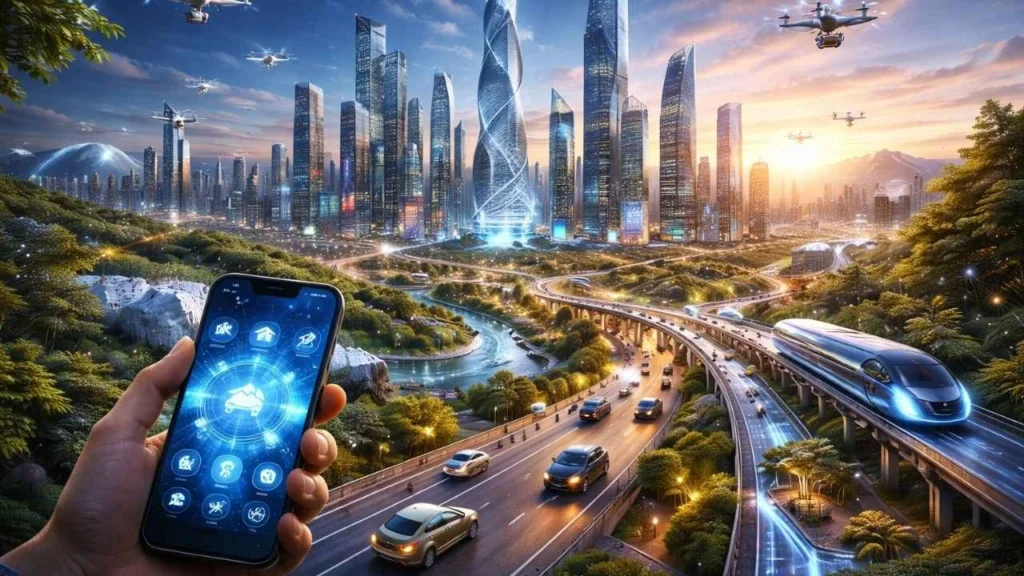
Technology has evolved at a breathtaking pace over the last two decades, quietly reshaping how we live, work, communicate, and govern our societies. What began as a personal convenience in the form of smartphones has expanded into something far more transformative—smart cities. This journey from handheld devices to fully connected urban ecosystems represents one of the most significant technological revolutions in human history. It is a shift not just in tools, but in mindset, infrastructure, and the future of civilization itself.
The Smartphone: A Small Device with a Massive Impact
The modern tech revolution gained momentum with the rise of smartphones. These compact devices brought together communication, information, entertainment, and productivity into a single platform. Smartphones changed how people interact with the world—news became instant, services became on-demand, and information became universally accessible.
Beyond calls and messages, smartphones introduced app ecosystems that enabled mobile banking, digital education, telemedicine, e-commerce, and social networking. For millions, especially in developing countries, smartphones became the first gateway to the digital world. They democratized access to knowledge and opportunities, laying the foundation for broader digital transformation. More importantly, smartphones familiarized users with concepts like cloud computing, GPS tracking, real-time data, and AI-powered assistants. These technologies later became the building blocks for smarter systems on a much larger scale.
The Internet of Things: Connecting Everything
As smartphones became smarter, they also became connectors—gateways to the Internet of Things (IoT). IoT refers to a network of devices embedded with sensors, software, and connectivity that allows them to collect and exchange data. From smartwatches and home assistants to connected cars and industrial machines, IoT expanded the idea of intelligence beyond personal devices. Homes became smarter with automated lighting, climate control, and security systems. Businesses used sensors to optimize supply chains and manufacturing processes.
This explosion of connected devices generated massive volumes of data, pushing advancements in cloud computing, data analytics, and artificial intelligence. Cities, too, began to see the potential of applying these technologies at scale.
Artificial Intelligence: The Brain Behind the Revolution
Artificial Intelligence (AI) plays a central role in the transition from smart devices to smart cities. While smartphones use AI for voice recognition, photography, and personalized recommendations, cities use AI for far more complex tasks.
AI systems can analyze traffic patterns to reduce congestion, predict energy demand to prevent blackouts, detect pollution levels, and even assist in crime prevention. Machine learning algorithms continuously improve these systems by learning from real-time data. In essence, AI acts as the brain of smart cities—processing information, making decisions, and optimizing operations faster and more efficiently than traditional systems ever could.
What Makes a City “Smart”?
A smart city uses digital technology and data-driven solutions to enhance the quality of life for its citizens, improve sustainability, and increase efficiency in public services. It is not just about high-tech infrastructure, but about intelligent governance and citizen-centric design.
Key components of smart cities include:
- Smart Transportation: Intelligent traffic signals, real-time public transport tracking, and electric vehicle infrastructure reduce congestion and pollution.
- Smart Energy: Smart grids and renewable energy integration improve energy efficiency and reliability.
- Smart Governance: Digital platforms for public services, grievance redressal, and citizen engagement enhance transparency.
- Smart Healthcare: Remote monitoring, telemedicine, and AI-assisted diagnostics improve healthcare access.
- Smart Environment: Sensors monitor air quality, waste management, and water usage to promote sustainability.
These systems work together, creating interconnected urban environments that respond dynamically to the needs of their populations.
The Role of 5G and Future Connectivity
The leap from smartphones to smart cities would not be possible without advancements in connectivity. 5G technology offers ultra-fast speeds, low latency, and the ability to connect millions of devices simultaneously.
This enables real-time communication between sensors, vehicles, infrastructure, and control centers. Autonomous vehicles, smart traffic systems, and emergency response networks all rely on high-speed, reliable connectivity. Looking ahead, technologies like 6G, satellite internet, and edge computing will further enhance the capabilities of smart cities, making them faster, more responsive, and more resilient.
Benefits for Citizens and Governments
The tech revolution from smartphones to smart cities offers tangible benefits:
- Improved Quality of Life: Reduced traffic, cleaner air, better healthcare, and faster services.
- Economic Growth: Innovation hubs, startups, and digital infrastructure attract investment and talent.
- Sustainability: Efficient resource management helps combat climate change.
- Safety and Security: Smart surveillance and predictive analytics enhance public safety.
- Inclusive Services: Digital platforms improve access to education, healthcare, and government services.
For governments, smart cities enable data-driven policymaking, better budget allocation, and improved accountability.
Challenges and Ethical Concerns
Despite their promise, smart cities also raise important concerns. Data privacy and surveillance are among the biggest challenges. As cities collect vast amounts of data, ensuring its security and ethical use becomes critical. There is also the risk of a digital divide, where those without access to technology are left behind. Smart city development must be inclusive, ensuring that benefits reach all sections of society. Cybersecurity threats, high implementation costs, and dependence on technology are additional hurdles that policymakers must address carefully.
The Road Ahead: A Smarter Future
The journey from smartphones to smart cities is still unfolding. What started as personal convenience has evolved into a vision of connected, intelligent societies. As technology continues to advance, cities will become not just smarter, but more human-centric—designed to serve people, not just systems. The success of this revolution depends on collaboration between governments, technology providers, urban planners, and citizens. When implemented thoughtfully, smart cities have the potential to solve some of humanity’s most pressing challenges.
Final Thoughts
From the palm of our hands to the streets we walk on, technology has transformed every layer of modern life. Smartphones ignited a digital revolution, and smart cities represent its most ambitious expression. This evolution is not merely about innovation—it is about reimagining how we live together in an increasingly connected world. As we move forward, the true measure of progress will not be how smart our cities are, but how wisely we use technology to build a sustainable, inclusive, and informed future.