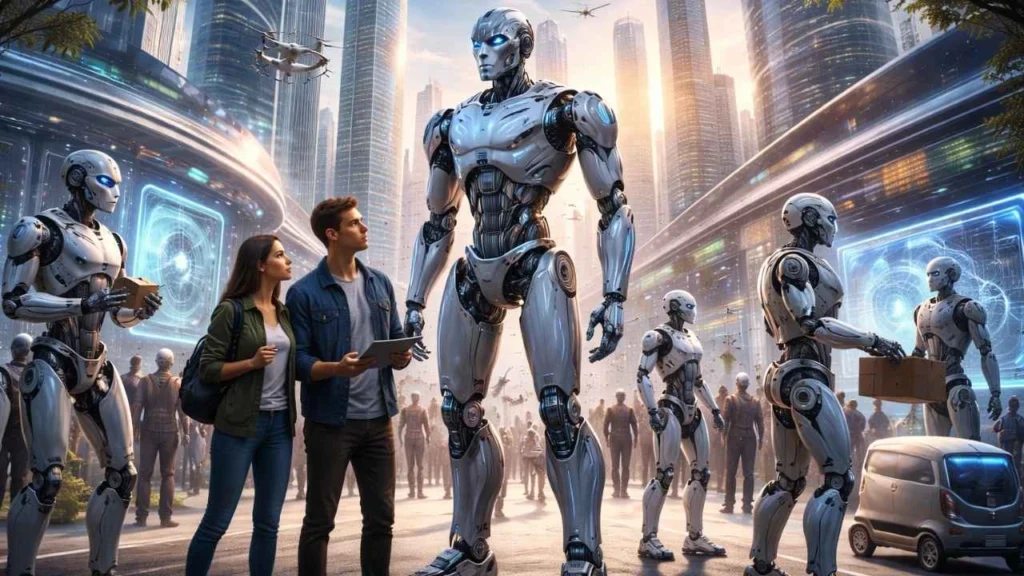
The world is witnessing a technological transformation unlike any in human history. Machines are no longer just tools that follow instructions—they are becoming smart, adaptive, and capable of learning, reasoning, and even creating. From artificial intelligence (AI) and machine learning to robotics and automation, smart machines are rapidly reshaping how we live, work, communicate, and think.
Once confined to science fiction, intelligent machines now recommend what we watch, drive cars, diagnose diseases, write articles, trade stocks, and assist governments. This dramatic rise raises a crucial question: Are humans truly ready for smart machines? The answer is complex, involving technology, ethics, economics, education, and the very definition of human intelligence.
Understanding Smart Machines
Smart machines are systems that use advanced technologies such as:
- Artificial Intelligence (AI)
- Machine Learning (ML)
- Deep Learning
- Natural Language Processing
- Robotics and Automation
Unlike traditional machines, smart machines can analyze data, recognize patterns, improve through experience, and make decisions with minimal human intervention. Examples include:
- Voice assistants like Alexa and Siri
- Autonomous vehicles
- AI-powered medical diagnostic tools
- Chatbots and virtual customer service agents
- Industrial robots in manufacturing
These systems are designed not just to execute tasks but to learn and adapt, making them increasingly powerful.
The Rapid Growth of Smart Machines
The rise of smart machines has been fueled by three major factors:
1. Explosion of Data
With billions of connected devices, the world generates massive amounts of data daily. Smart machines thrive on data, using it to learn, predict, and optimize performance.
2. Increased Computing Power
Advancements in cloud computing, GPUs, and specialized AI chips have enabled faster and more efficient processing of complex algorithms.
3. Improved Algorithms
Breakthroughs in AI research have significantly improved accuracy, speed, and reliability, allowing machines to outperform humans in specific tasks.
Together, these factors have accelerated the adoption of smart machines across industries.
How Smart Machines Are Changing Our Lives?
1. Workplace Transformation
Automation and AI are redefining jobs. Repetitive and manual tasks are increasingly handled by machines, while humans shift toward roles requiring creativity, critical thinking, and emotional intelligence. While smart machines increase productivity and efficiency, they also raise concerns about job displacement. Entire professions—from data entry to customer support—are being transformed or replaced.
2. Healthcare Revolution
Smart machines are revolutionizing healthcare by:
- Detecting diseases earlier
- Assisting in surgeries
- Personalizing treatment plans
- Predicting patient outcomes
AI systems can analyze medical images faster and sometimes more accurately than human doctors, potentially saving millions of lives.
3. Education and Learning
AI-powered platforms personalize education, adapt to individual learning styles, and provide real-time feedback. However, reliance on smart systems also raises concerns about reduced human interaction and critical thinking skills.
4. Daily Life and Convenience
From smart homes to navigation apps, intelligent machines simplify everyday tasks. While this convenience improves quality of life, it also increases dependence on technology.
Are Humans Psychologically Ready?
One of the biggest challenges is human adaptation. Many people feel uneasy or threatened by machines that can think, decide, and even create.
Fear of Replacement
A common concern is that machines will replace humans, leading to mass unemployment and loss of purpose. While new jobs will emerge, the transition may be painful for many.
Trust Issues
Can we trust machines to make decisions about healthcare, justice, or warfare? When machines make mistakes, who is responsible—the programmer, the user, or the machine itself?
Loss of Human Identity
As machines mimic human abilities like writing, art, and conversation, some fear the erosion of what makes humans unique.
Ethical Challenges of Smart Machines
The rise of smart machines introduces serious ethical dilemmas:
Bias and Discrimination
AI systems can inherit biases from data, leading to unfair outcomes in hiring, law enforcement, and lending.
Privacy Concerns
Smart machines collect massive amounts of personal data, raising questions about surveillance, data misuse, and consent.
Autonomous Decision-Making
Should machines be allowed to make life-and-death decisions, such as in military drones or self-driving cars?
Control and Accountability
As machines become more autonomous, ensuring human oversight becomes increasingly difficult.
Economic Impact: Opportunity or Threat?
Smart machines offer immense economic benefits:
- Increased efficiency
- Lower production costs
- Faster innovation
- Creation of new industries
However, they also widen inequality. Skilled workers benefit more than those in low-skill jobs, potentially increasing social and economic divides. Countries that invest in AI and automation gain competitive advantages, while others risk falling behind, leading to global imbalances.
Education: Preparing Humans for a Smart Machine Era
To coexist with smart machines, humans must adapt through education and skill development.
Essential Future Skills
- Critical thinking
- Creativity
- Emotional intelligence
- Digital literacy
- Ethical reasoning
Traditional education systems must evolve to focus on lifelong learning rather than rote memorization.
Can Humans and Smart Machines Coexist?
Rather than viewing smart machines as enemies, many experts advocate collaboration. Humans excel at creativity, empathy, and moral judgment, while machines excel at speed, accuracy, and data processing.
The future lies in human-machine partnerships, where technology amplifies human potential rather than replaces it.
The Global Race for Smart Machines
Governments worldwide are investing heavily in AI and automation. Nations that lead in smart machine development gain strategic, economic, and military advantages.
This race raises concerns about:
- AI arms races
- Unequal access to technology
- Lack of global regulations
International cooperation is crucial to ensure responsible development.
Latest Updates in Smart Machine Development
- AI models are now capable of multimodal understanding (text, image, voice).
- Robotics is advancing toward more human-like movement and interaction.
- Governments are introducing AI regulations focused on transparency and safety.
- Companies are integrating AI into nearly every digital service.
These updates indicate that smart machines are no longer a future concept—they are a present reality.
Are Humans Truly Ready?
The honest answer is: partially, but not fully.
Technologically, humanity has made incredible progress. Socially, ethically, and psychologically, we are still catching up. Readiness requires:
- Strong ethical frameworks
- Inclusive education
- Responsible governance
- Public awareness
Without these, the rise of smart machines could deepen inequalities and create new risks.
Final Thoughts
The rise of smart machines is inevitable. The real question is not whether machines will become smarter, but how humans choose to guide their development. If used wisely, smart machines can solve humanity’s greatest challenges—from climate change to healthcare access. If misused or poorly regulated, they could threaten privacy, equality, and autonomy. Humans are not powerless in this transformation. By staying informed, adaptable, and ethically conscious, society can ensure that smart machines remain tools for progress—not replacements for humanity.